
More booked jobs. Faster quotes. Less office chaos.
I work directly with HVAC, plumbing, electrical, garage-door, roofing, and other service-business owners to fix missed calls, slow quotes, dispatch bottlenecks, disconnected systems, and late margin visibility — then build the practical AI, software, integration, or workflow that solves the problem.
Keep the tools that work. Fix the handoffs that do not. Work directly with Nick.
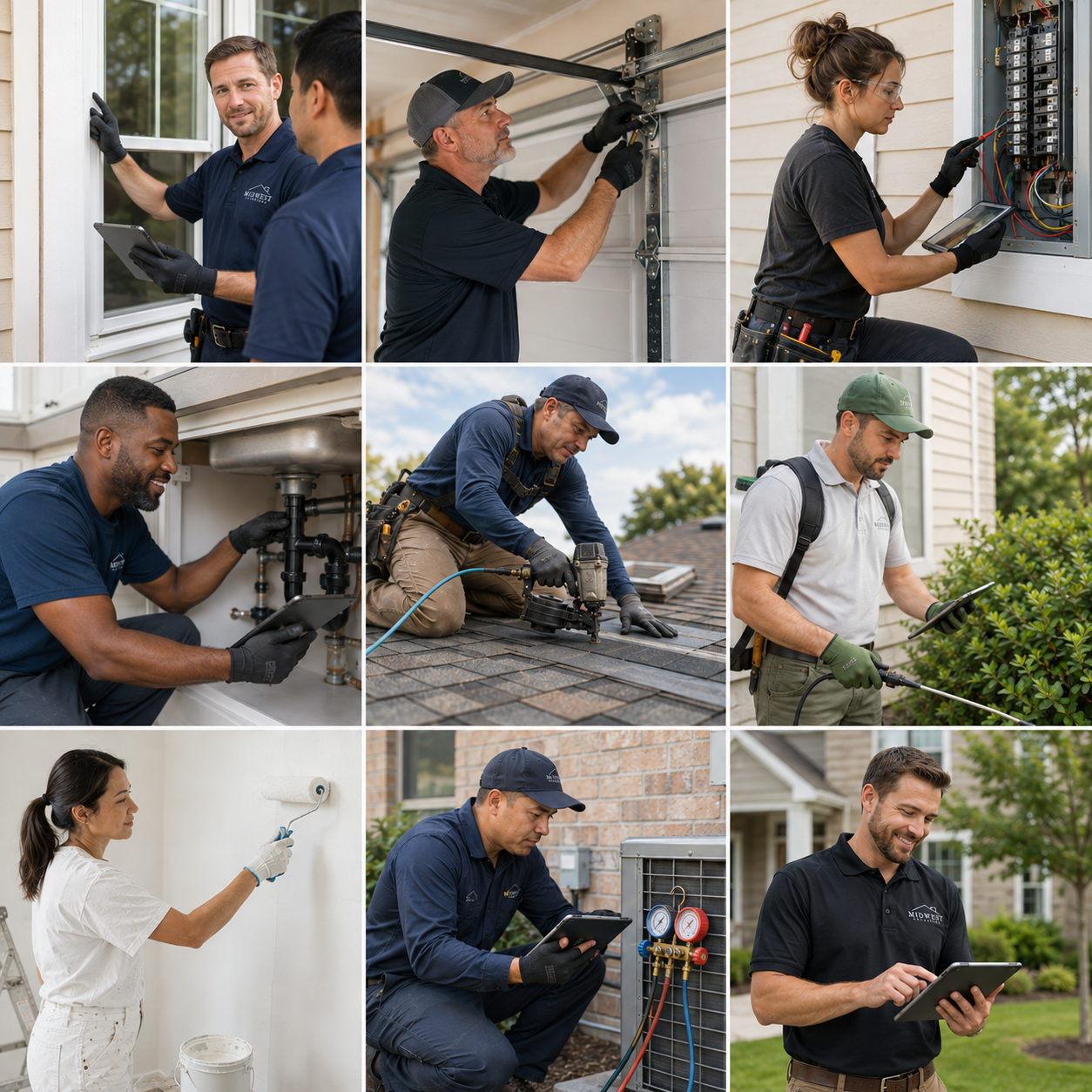
Where service businesses get stuck — and what I fix.
The work itself is usually not the problem. Revenue and time leak out when calls, pricing, schedules, job information, and financial results do not move cleanly from one step to the next.
Calls go unanswered
I build after-hours answering, overflow coverage, missed-call recovery, qualification, appointment booking, follow-up, and human escalation around the company's actual rules.
More qualified demand becomes scheduled work.
Quotes wait too long
I connect job details, pricing logic, labor, materials, options, customer approvals, and follow-up into a faster estimating and proposal workflow.
Customers receive a clear answer while they are still ready to buy.
Dispatch depends on one person
I turn the constraints the best dispatcher carries in their head into a usable scheduling, technician-matching, job-brief, and office-to-field handoff workflow.
Less daily juggling and better-prepared technicians.
Owners see the numbers too late
I connect calls, bookings, jobs, backlog, estimated versus actual costs, callbacks, renewals, and margin into a current operating view.
Problems surface while there is still time to act.
Best fit: established service companies with a field team, meaningful inbound demand, and an operating bottleneck that spreadsheets or disconnected software are no longer solving well.
Built for HVAC, plumbing, electrical, garage door, roofing, restoration, pest control, landscaping, commercial service, and other businesses that answer calls and send people to job sites.
Starting with the trades we know best.
This is not generic AI theory.
My work has included reporting products, service-business operating systems, field workflows, quote tools, dashboards, and AI concepts built around real service operations.
Reporting and analytics for trades
Built reporting and analytics products for trades and home-service businesses, including Tillwise Reports and Manifold Reports.
- What I did
- Product strategy, reporting logic, workflow design, and product development.
- What was built
- Products that converted operational and financial data into clearer reporting for service-business owners.
- Why it matters here
- The same experience applies when connecting calls, jobs, sales, technician activity, costs, and margin into a useful owner view.
Field-service CRM and AI quote assistant
Designed a custom service operating system for a 37-year commercial service business whose QuickBooks Desktop data also functions as its customer history.
- What I did
- Mapped the service operation and designed the customer, technician, dispatch, quote-assistant, reporting, and QuickBooks Desktop integration workflows.
- What was designed
- Technician service-ticket application
- Customer and service-location history
- Dispatch and HQ operating views
- AI-assisted quote preparation
- Service and recurring-revenue visibility
- Why it matters here
- It demonstrates how I connect the real business operation to the software and AI design instead of starting with a generic platform.
Have an operating problem like this? Let's Build Together.
One person who understands the business — and can build the solution.
I connect revenue, operations, and software so the system is designed around how the company actually makes money.
I have spent more than 20 years working across revenue, enterprise sales, marketing, product, software, AI, and operations. That mix matters because the hard part is rarely the technology by itself. The hard part is understanding why the call was missed, why the quote is slow, what the dispatcher is really solving, and where the job loses margin.
I work directly with owners from the first operating conversation through the working build. Sometimes the answer is an AI voice agent. Sometimes it is a quote workflow, field application, integration, reporting product, existing software configured better, or a process change. If custom AI is not the right answer, I will say so.
Start with one bottleneck. Build only what earns the next step.
Talk through the operation
We focus on the call, quote, scheduling, field, reporting, or integration problem creating the most friction.
Map what should change
I document how the workflow works today, where it breaks, what the system must know, and where a person must remain in control.
Build and test one solution
If a build makes sense, I scope a focused pilot, launch it with the team, and measure whether it is actually improving the operation.
The first project should solve one real problem — not attempt to rebuild the entire company.
Service Operations Review
Not sure what should be built? I will map the current workflow, identify where revenue or time is leaking, rank the best opportunities, and give you a clear recommendation to buy, build, integrate, automate, or simplify.
- Current workflow map
- Key bottlenecks and risks
- Ranked opportunities
- Recommended next step
- Initial pilot scope when appropriate
Already know the problem? We can discuss a focused pilot.
A few straight answers.
Do I need to replace my current field-service software?
We review your current systems and software platforms together and decide what still makes sense to keep and build on — and what is better replaced with a more custom, flexible solution. The right mix is often simpler and more cost-effective over time than forcing workarounds onto tools that no longer fit.
Can an AI agent really answer calls and book jobs?
Yes, when the calendar, business rules, escalation paths, and integrations support it. The system should know when it can proceed and when it must hand the call to a person.
Will this replace my office staff or technicians?
The goal is to remove repetitive work and broken handoffs, not replace the judgment and relationships that make the company successful.
Can you work with QuickBooks and our existing CRM or field-service software?
Often, but integration feasibility depends on the specific system, version, API, export options, and data quality. I confirm that before promising a build.
How are projects scoped and priced?
The first engagement is scoped around one operating problem. A Service Operations Review can be fixed-scope; a pilot build is priced after the workflow, data, integration, and approval requirements are clear. I do not recommend a large build before the first problem is understood.
What happens first?
We talk about the part of the operation that is costing the most time, revenue, or frustration. From there, I can recommend an assessment, a focused pilot, an existing product, or a process change.
Show me where the business is getting stuck.
Tell me what is happening with calls, quotes, scheduling, field work, software, or reporting. I will tell you what I would look at first — and whether I am the right person to help.
I take a limited number of engagements so I can remain directly involved.